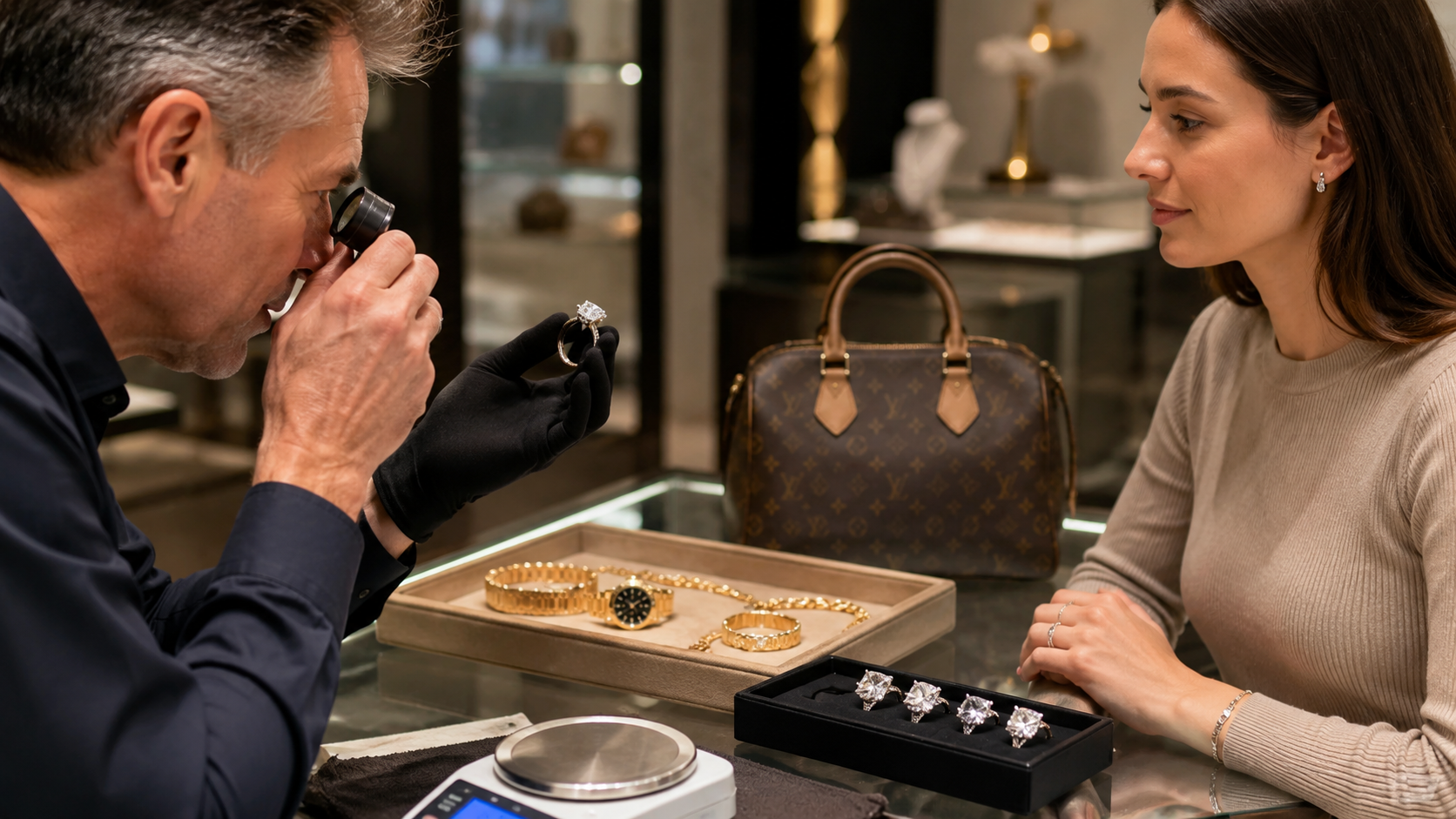
Pawning your jewelry can be the smarter choice if you need temporary cash and plan to reclaim your items within a few months, because pawn loans in Phoenix typically offer immediate funds without credit checks or permanent loss of sentimental pieces. However, if you need more money upfront or cannot afford the interest charges and fees that accumulate during the loan period, selling outright delivers better total value. Understanding the difference between pawn jewelry Phoenix vs sell options helps you avoid costly mistakes and choose the path that fits your financial situation and emotional attachment to your valuables.
How Pawn Shops Work: Loans, Interest, and Redemption in Phoenix
A pawn transaction is fundamentally a secured loan. You bring your jewelry to a licensed pawn shop, where an appraiser evaluates the item and offers you a loan amount based on its resale value. In return, the shop holds your jewelry as collateral for a fixed period, usually 90 days in Arizona, though some shops offer extensions.
During the loan term, you pay interest and storage fees. Arizona state law caps pawn shop interest at 10% per month on the first $150 of the loan, 5% per month on amounts from $150 to $1,000, and 3% per month on amounts over $1,000, according to the Arizona Revised Statutes. For example, a $500 loan would accrue roughly $32.50 in interest each month under these caps.
If you repay the full loan amount plus interest before the deadline, you reclaim your jewelry. Many Phoenix pawn shops allow you to extend or renew the loan by paying the accrued interest, which keeps your item in pawn but resets the clock. However, if you fail to pay by the end of the agreed period and do not arrange an extension, the shop legally owns your jewelry and can sell it to recover their loan.
Most reputable Phoenix pawn shops provide a written pawn ticket that includes the loan amount, interest rate, redemption deadline, and a detailed description of your item. You must present this ticket to reclaim your jewelry. Because the ticket serves as your proof of ownership during the pawn period, losing it can create complications, so keep it in a safe place.
How Much Will a Phoenix Pawn Shop Loan You vs. Sell Value
Pawn shops typically loan between 40% and 60% of an item’s estimated resale value, while offering closer to 60% to 80% if you choose to sell the same piece outright. This gap exists because the shop takes on risk when issuing a loan. They must store and insure your jewelry, handle the administrative burden of tracking redemption deadlines, and face the possibility that you will reclaim the item, meaning they never recoup the loan through resale.
When you sell, the pawn shop can immediately list and market the item, turning over inventory faster and reducing holding costs. As a result, they can afford to pay you a higher percentage of market value. For example, if your gold bracelet has a resale value of $1,000, a pawn loan might offer you $400 to $500, whereas selling could net you $600 to $800.
Pawn shops calculate loan amounts by assessing several factors. For precious metals, they weigh your piece and check the karat purity of gold or silver, then apply a percentage of the current spot price. For diamond jewelry, gemstone quality, brand name, and condition all influence the appraisal. Because shops need to account for potential fluctuations in gold and gemstone markets, their loan offers remain conservative.
In addition, each shop has different overhead costs, clientele, and inventory needs. A pawn shop near Old Town Scottsdale serving high-end customers may offer more competitive rates on designer jewelry than a shop in a lower-traffic area. Therefore, comparing offers from multiple Phoenix-area pawn shops can help you secure the best deal, whether you pawn or sell.
When Pawning Makes Sense (and When It Doesn’t)
Pawning works best when you face a short-term cash need and expect to repay the loan quickly. For instance, if you need $800 to cover an unexpected car repair and you receive a paycheck in two weeks, pawning a gold necklace might cost you only $80 in interest for a single month. Compared to a payday loan with triple-digit annualized rates or a credit card cash advance at 25% APR plus fees, pawning can be more affordable.
Another scenario where pawning makes sense is when your jewelry holds significant sentimental value. Perhaps the piece belonged to a grandparent or marks a milestone in your life. In this case, the ability to reclaim it justifies the interest cost. Selling would mean permanently losing that connection, which may feel worse than the financial expense of a pawn loan.
However, pawning becomes a poor choice if you cannot realistically repay the loan within the agreed timeframe. If your cash shortage is long-term or you lack a clear plan to generate the repayment funds, the interest will accumulate each month. Over three or four months, you might pay $200 or more in interest on a $500 loan, at which point you would have been better off selling and pocketing the higher upfront amount.
Similarly, if you have access to better financing options, such as a low-interest personal loan from a credit union or a 0% APR credit card introductory offer, those alternatives often beat pawn shop interest rates. For example, a $1,000 personal loan at 8% annual interest costs far less over six months than a pawn loan accruing 10% per month on the first portion of the balance.
Finally, consider the emotional cost of worrying about deadlines. If the stress of tracking a redemption date and scraping together funds by a certain day outweighs the sentimental value of your jewelry, selling outright can bring peace of mind. You receive more cash immediately, eliminate ongoing obligations, and move forward without the risk of forfeiting the item.
Red Flags and Risks at Phoenix Pawn Shops
Not all pawn shops operate with the same transparency or customer care. Before you commit to a pawn loan, watch for warning signs. If a shop refuses to provide a written pawn agreement with clear terms, walk away. Arizona law requires pawn brokers to issue a written contract detailing the loan amount, interest rate, maturity date, and item description. Any shop that skips this step is either inexperienced or untrustworthy.
Another concern is insurance. Because your jewelry remains in the shop’s possession for weeks or months, you need assurance that it is protected against theft, fire, or damage. Reputable pawn shops carry insurance policies to cover the full value of items in their vaults. Ask about their insurance coverage before you hand over your valuables. If the staff cannot or will not answer, consider another shop.
Losing your pawn ticket creates complications. While Arizona law allows you to reclaim your item with alternative proof of identity and a written affidavit, the process can be slow and inconvenient. Some shops charge a replacement fee or require a waiting period to confirm no one else has claimed the ticket fraudulently. To avoid this hassle, take a photo of your pawn ticket and store it digitally in addition to keeping the physical copy safe.
High-pressure sales tactics are another red flag. If a pawn shop employee pushes you to sell instead of pawn, question their motives. While selling may genuinely be the better option in some cases, a shop that profits more from immediate inventory turnover may not prioritize your best interest. A trustworthy pawn broker will explain both options clearly and let you decide without pressure.
Finally, verify that the shop holds a valid Arizona pawn broker license. The Arizona Department of Financial Institutions oversees pawn shop licensing and compliance. You can check a shop’s license status online or ask to see their license certificate displayed in the store. Operating without a license is illegal and a major warning sign of potential fraud or unethical practices.
Selling Jewelry Outright: Why It Might Be Better Than Pawning
When you calculate the total cost of a pawn loan, selling often emerges as the more financially sound choice. Suppose you pawn a ring for $600 and plan to repay within three months. At 10% monthly interest on the first $150 and 5% on the remaining $450, you will pay approximately $100 in interest over that period. Add any storage or administrative fees, and your total cost to reclaim the ring could reach $120 or more.
If the same ring would sell for $900 at the pawn shop, you walk away with $300 more in your pocket immediately and avoid all interest charges. Over time, that extra cash can be reinvested, used to pay down higher-interest debt, or cover ongoing expenses. For many people facing financial strain, maximizing upfront funds outweighs the possibility of reclaiming an item later.
Selling also eliminates the risk of default. Life is unpredictable, and even the best-laid repayment plans can fall apart if an emergency arises or income falls short. If you default on a pawn loan, you lose your jewelry and receive nothing in return for the interest you already paid. Selling guarantees you receive compensation and closes the transaction permanently.
Another advantage of selling is simplicity. You complete one transaction, receive payment, and move on. There are no deadlines to track, no monthly interest accruing, and no need to return to the shop multiple times. For individuals juggling work, family, and other responsibilities, reducing financial complexity can be a significant relief.
However, selling does mean permanent loss of the item. If your jewelry holds irreplaceable sentimental value or you anticipate being able to afford a similar piece in the future, the emotional cost of selling may outweigh the financial benefits. This is a deeply personal decision that depends on your attachment to the piece and your long-term goals.
In addition, some Phoenix pawn shops offer alternative services that blur the line between pawning and selling. For example, consignment arrangements allow the shop to sell your jewelry on your behalf and split the proceeds, potentially netting you more than an outright sale to the shop. Ask about all available options, including our services at Biltmore Loan and Jewelry, to understand which approach delivers the best outcome for your situation.
Making the Right Choice for Your Situation
Choosing between pawning and selling ultimately depends on your financial timeline, the sentimental value of your jewelry, and your ability to repay a loan. If you need $500 for two weeks and own a bracelet you inherited from a family member, pawning makes sense. The interest cost will be minimal, and you preserve the heirloom. On the other hand, if you need $2,000 to cover several months of rent and lack a steady income source, selling delivers more cash and avoids the stress of escalating debt.
Before making a decision, gather multiple appraisals. Visit at least two or three Phoenix pawn shops and ask for both pawn loan offers and outright purchase offers on the same item. This comparison reveals the true cost of pawning versus selling and helps you identify which shops offer the fairest terms. Transparency varies widely, so do not settle for the first offer you receive.
Consider your opportunity cost as well. If selling your jewelry frees up funds that allow you to avoid a high-interest payday loan or late fees on critical bills, the indirect savings can exceed the direct financial difference between pawning and selling. Run the numbers and think through the downstream consequences of each choice.
Also, factor in the condition and marketability of your jewelry. Items with broad appeal, such as gold chains or diamond studs, retain value better than highly personalized or trendy pieces. If your jewelry is niche or damaged, the gap between pawn loan amounts and selling prices may narrow, making the decision easier.
Finally, trust your instincts about the shop itself. A pawn broker who takes time to explain your options, answers questions patiently, and treats you with respect is worth doing business with, whether you pawn or sell. Poor customer service or evasive answers should prompt you to look elsewhere, even if the financial offer seems attractive. Your peace of mind and the security of your valuables matter just as much as the dollar amount.
Why Biltmore Loan and Jewelry Offers Both Options
At Biltmore Loan and Jewelry, we understand that every customer’s situation is unique. Some clients need short-term liquidity and want to keep their jewelry for the long haul, while others prefer to maximize immediate cash and move forward. That is why we offer transparent pawn loans and competitive purchase prices on the same items, with no pressure to choose one over the other.
Our appraisers evaluate each piece carefully, considering current gold and gemstone markets, brand reputation, condition, and local demand in the Scottsdale and Phoenix area. We explain how we calculate loan amounts and purchase offers so you understand exactly what you are receiving and why. Transparency builds trust, and we believe informed customers make better decisions.
We also maintain comprehensive insurance on all items in our vault, giving you peace of mind that your jewelry is protected while in our possession. Our written pawn agreements comply fully with Arizona state law, and we keep detailed records to ensure a smooth redemption process. Whether you choose to pawn or sell, we treat your valuables with the care they deserve.
If you are weighing your options and want expert guidance, visit Biltmore Loan and Jewelry or contact us today. Our team will answer your questions, provide honest appraisals, and help you choose the path that best fits your financial needs and personal circumstances. You deserve a pawn shop that puts your interests first, and we are here to deliver that experience every time.
Frequently Asked Questions
How long do I have to repay a pawn loan in Phoenix?
Most Phoenix pawn shops offer a 90-day redemption period under Arizona law. You can often extend the loan by paying the accrued interest before the deadline, which resets the clock for another term. If you do not repay or extend, the shop takes ownership of your jewelry.
Will I get more money if I sell my jewelry instead of pawning it?
Yes, selling typically nets you 60% to 80% of an item's resale value, while pawn loans offer 40% to 60%. However, selling means you lose the item permanently, whereas pawning allows you to reclaim it if you repay the loan plus interest.
What happens if I lose my pawn ticket in Phoenix?
You can still reclaim your jewelry by providing alternative proof of identity and signing a written affidavit, but the process may take longer and some shops charge a replacement fee. Always keep your pawn ticket in a safe place and consider taking a digital photo as backup.
Are pawn shop interest rates in Phoenix cheaper than payday loans?
Often yes. Arizona caps pawn shop interest at 10% per month on the first $150 and lower rates on higher amounts, while payday loans can carry annualized rates exceeding 200%. For short-term needs, pawning is usually more affordable than payday lending.
Do Phoenix pawn shops insure my jewelry while they hold it?
Reputable pawn shops carry insurance to protect items in their possession against theft, fire, or damage. Always ask about insurance coverage before pawning your valuables, and avoid any shop that cannot or will not provide a clear answer.
Photo by Ian Dziuk on Unsplash via Ian Dziuk.