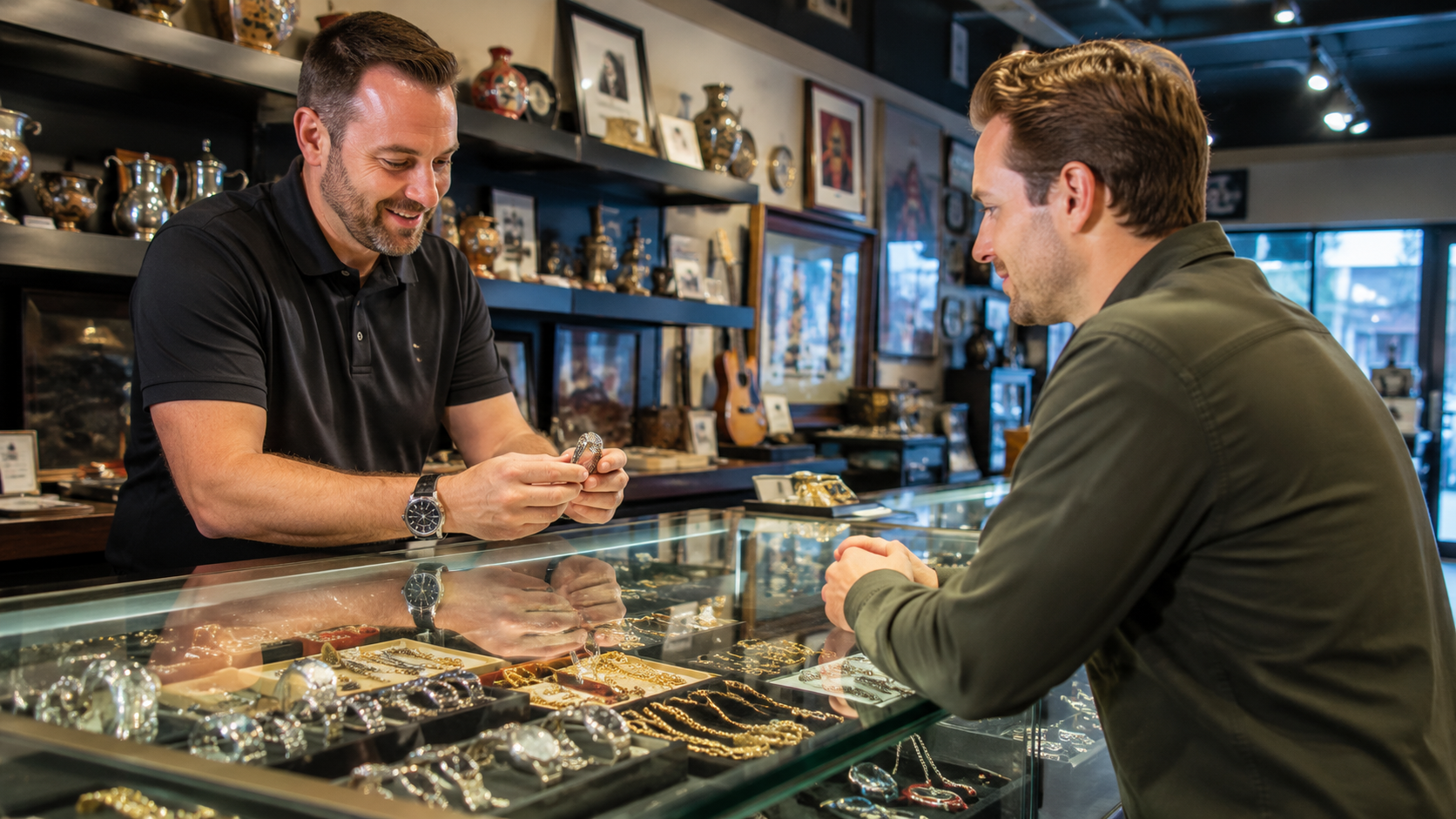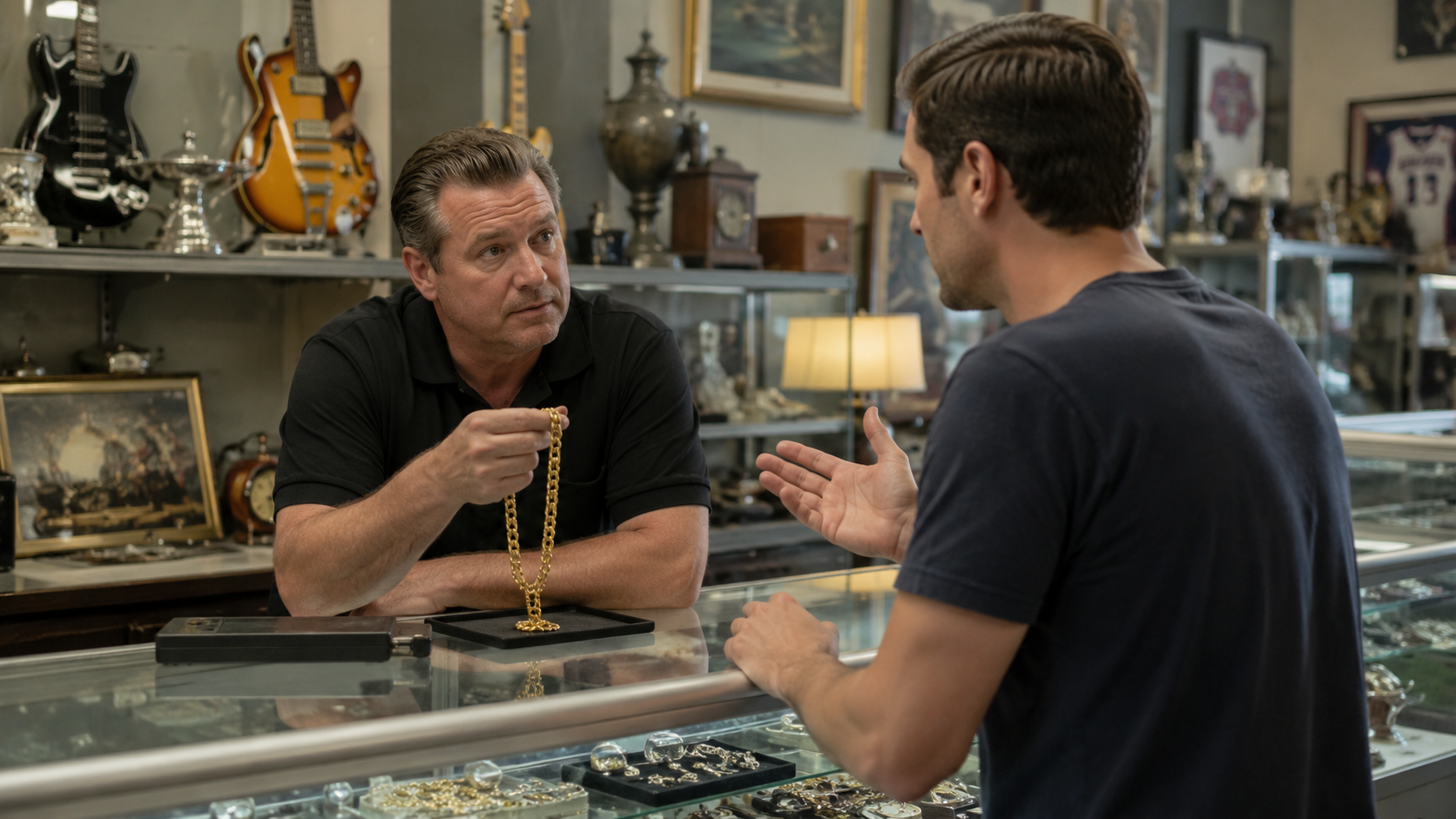
Searching for Scottsdale where to sell gold can feel simple at first, yet many beginners make avoidable mistakes before they ever receive an offer. Gold jewelry, coins, silver, Rolex watches, estate jewelry, and designer pieces can all carry different types of value. Therefore, choosing the right buyer and understanding the process can make a major difference in your payout and overall experience.
If you want to sell gold or sell gold jewelry, you should know how gold purity, item weight, gemstones, designer value, condition, documentation, and market demand affect the offer. In addition, you should understand when a jewelry appraisal or collateral loan may be a better option than selling outright.
For clients in Scottsdale, Phoenix, Mesa, Gilbert, Chandler, Tempe, Queen Creek, Fountain Hills, Cave Creek, Peoria, Surprise, Glendale, Goodyear, and Avondale, Biltmore Loan offers confidential gold evaluations, gold and silver buying, Rolex assessments, jewelry appraisals, estate jewelry evaluations, and discreet luxury collateral loans.
Why Beginners Need to Be Careful When Selling Gold
Many first-time sellers assume every gold buyer follows the same process. However, that is not always true. Some buyers focus only on scrap gold value, while others also consider finished jewelry value, diamonds, gemstones, designer marks, estate appeal, and luxury resale demand.
Because of this, beginners can easily accept a low offer without realizing it. For example, a broken gold chain may be valued mostly by karat and weight. However, a diamond-set designer bracelet or inherited gold necklace may deserve a more detailed appraisal.
A beginner should understand that gold value may depend on:
- Karat purity
- Item weight
- Current gold market prices
- Jewelry condition
- Diamond or gemstone value
- Designer signatures
- Estate or antique appeal
- Resale demand
- Documentation
- Buyer expertise
- Selling versus collateral lending
As a result, the best place to sell gold is usually the buyer who explains value clearly, not simply the buyer who gives the fastest offer.
Mistake #1: Visiting Without Understanding Gold Karat
One of the most common beginner mistakes is not knowing what gold karat means. Gold jewelry is often marked with a karat number that shows how much pure gold is in the item.
Common markings include:
- 10K
- 14K
- 18K
- 22K
- 24K
Generally, higher karat gold contains more pure gold. However, weight also matters. A heavy 14K bracelet may contain more total gold than a very light 18K ring.
Therefore, a trusted buyer should explain both karat and weight before giving an offer. If markings are missing or worn, the buyer should test the item and explain the process. If a buyer refuses to discuss purity, that is a warning sign.
Mistake #2: Assuming All Gold Buyers Pay the Same
Another mistake is assuming that every buyer will offer the same amount. Although gold has a public market price, buyers may calculate offers differently.
Some buyers may focus only on melt value. Others may recognize added value from diamonds, designer names, estate appeal, or finished jewelry resale potential. Consequently, two buyers may offer very different amounts for the same item.
Before choosing where to sell, compare:
- How the buyer tests gold
- Whether the weighing process is clear
- Whether gemstones are reviewed
- Whether designer marks are considered
- Whether estate jewelry is evaluated carefully
- Whether Rolex watches can be appraised
- Whether collateral loans are available
- Whether the transaction feels private
A professional Scottsdale gold buyer should make the process easy to understand.
Mistake #3: Accepting a Vague Lump-Sum Offer
Beginners often bring several items at once, such as gold rings, bracelets, silver coins, diamond jewelry, and estate pieces. However, accepting one vague lump-sum offer can make it difficult to know what each item is worth.
A clear evaluation should explain:
- Which items are gold
- What karat each item is
- How much each category weighs
- Whether stones add value
- Whether designer value was considered
- Whether silver or platinum is included
- Whether any item needs a separate appraisal
If a buyer gives one number without explanation, ask for details. Moreover, if they refuse to explain, consider another option.
Mistake #4: Letting Finished Jewelry Be Treated Like Scrap
Not all gold jewelry should be treated as scrap. While broken or heavily damaged pieces may be valued mostly by metal content, many items have additional value as finished jewelry.
Finished jewelry may be worth more because of:
- Designer signatures
- Diamonds
- Gemstones
- Antique craftsmanship
- Estate appeal
- Matching sets
- Strong condition
- Brand recognition
- Local resale demand
For instance, a simple broken chain may be valued by weight. In contrast, a signed gold bracelet or diamond-set necklace may carry resale value beyond gold content. Therefore, when you sell gold jewelry, ask whether the item is being valued as scrap, finished jewelry, or both.
Mistake #5: Ignoring Diamonds and Gemstones
Some beginners focus only on the gold and forget that diamonds or gemstones may affect value. However, stones can be important, especially in rings, bracelets, pendants, and estate jewelry.
Diamond value may depend on:
- Carat weight
- Cut
- Color
- Clarity
- Shape
- Certification
- Condition
- Market demand
Gemstones such as sapphires, rubies, emeralds, and pearls may also add value depending on quality, size, treatment, and demand. However, not every stone adds significant resale value. For that reason, a trustworthy buyer should explain whether the stones affect the offer.
If a buyer ignores gemstones completely, the appraisal may be incomplete.
Mistake #6: Forgetting About Jewelry Appraisal Value
A jewelry appraisal can help you understand what your item is worth before accepting an offer. This is especially helpful if the piece includes diamonds, gemstones, designer marks, antique details, or estate history.
A professional appraisal may review:
- Metal type and purity
- Gold karat
- Item weight
- Diamond quality
- Gemstone condition
- Designer signatures
- Craftsmanship
- Age and style
- Condition
- Resale potential
- Collateral value
Because jewelry can hold value beyond gold content, beginners should look for a buyer with appraisal knowledge. Otherwise, a valuable piece may be treated like ordinary scrap.
Mistake #7: Not Bringing Documentation
Documentation is not always required, but it can help support value. Beginners often forget paperwork that could make the evaluation more complete.
Helpful documents may include:
- Original receipts
- Previous appraisals
- Diamond grading reports
- Designer certificates
- Rolex box and papers
- Watch service records
- Estate documents
- Insurance records
- Certificates of authenticity
For diamonds, grading reports can clarify quality. For Rolex watches, box and papers may support authenticity and market appeal. Meanwhile, estate documents can provide useful background for inherited pieces.
Even without paperwork, a skilled buyer can still evaluate many items. Nevertheless, bringing documents may help prevent important details from being missed.
Mistake #8: Cleaning or Repairing Jewelry Before the Visit
Many beginners think they should clean, polish, or repair jewelry before selling. However, that is not always the best choice.
Some estate jewelry, antique pieces, vintage watches, or designer items may be better evaluated in their current condition. In some cases, aggressive polishing can reduce originality or collector appeal. Additionally, repair costs may be higher than the value they add.
Before changing the item, get a professional evaluation. A trusted buyer can explain whether repair, cleaning, selling as-is, or borrowing against the item makes the most sense.
Mistake #9: Choosing Convenience Over Expertise
The closest buyer is not always the right buyer. Convenience matters, but expertise matters more when you are selling gold, jewelry, Rolex watches, silver, or estate assets.
A qualified buyer should understand:
- Gold purity and weight
- Gold and silver buying
- Diamond and gemstone review
- Designer jewelry
- Estate jewelry
- Rolex watches
- Luxury collateral lending
- Local resale demand
A basic pawn shop may focus on quick resale. However, a luxury pawn shop can offer a more refined evaluation for high-value assets. Therefore, if your item has more than basic metal value, choose expertise over speed.
Mistake #10: Not Asking About Silver and Platinum
Many people searching for a place to sell gold also have silver or platinum items. A professional gold and silver buyer should evaluate each metal separately.
Silver items may include:
- Sterling silver jewelry
- Silver coins
- Silver bullion
- Estate silver
- Silver flatware
- Designer silver pieces
Platinum may appear in diamond rings, engagement rings, and fine jewelry settings. Since these metals have different values, they should not be grouped into one unclear offer.
If you bring multiple metals, ask the buyer to explain each category.
Mistake #11: Selling Estate Jewelry Too Quickly
Estate jewelry can be emotional and valuable. Beginners may rush to sell inherited pieces without knowing what they own. However, estate collections often include mixed items that require careful review.
Estate jewelry may include:
- Gold rings and chains
- Diamond jewelry
- Platinum pieces
- Sterling silver
- Rolex watches
- Designer jewelry
- Antique brooches
- Gemstone pieces
- Coins or bullion
- Luxury watches
Because estate items can hold both sentimental and financial value, they should be reviewed piece by piece. A rushed evaluation may miss designer marks, gemstone value, antique craftsmanship, or Rolex demand.
Families in Scottsdale, Fountain Hills, Cave Creek, Queen Creek, and Phoenix often seek estate evaluations before selling or dividing assets. Meanwhile, clients in Chandler, Gilbert, Mesa, Glendale, Peoria, Surprise, Goodyear, and Avondale may need help sorting inherited valuables with confidence.
Mistake #12: Not Considering a Collateral Loan
Selling is not always the only option. In some cases, a collateral loan may be better, especially when the item has sentimental value or you need temporary funding.
Selling may be right if:
- You no longer wear the jewelry
- You want immediate cash
- You inherited items you do not want
- The piece is broken or unused
- You are upgrading your collection
- You prefer a final transaction
A collateral loan may be better if:
- You want to keep ownership
- The item has personal meaning
- You need short-term funding
- You want to avoid bank delays
- You plan to repay and retrieve the item
- You prefer private asset-based lending
Therefore, before selling permanently, ask whether a loan option is available.
Mistake #13: Treating Rolex Watches Like Regular Gold Items
Some beginners bring Rolex watches along with gold jewelry. However, Rolex watches require a different evaluation process.
If you want to sell Rolex watches or use one as collateral, the buyer should review:
- Model
- Reference number
- Serial number
- Case condition
- Bracelet condition
- Dial and bezel details
- Box and papers
- Service history
- Authenticity
- Current market demand
Even if a Rolex contains gold, it should not be evaluated like a gold bracelet. Brand demand, model popularity, condition, documentation, and originality all matter.
Because Biltmore Loan evaluates Rolex watches along with gold, silver, jewelry, and estate pieces, clients can receive a broader luxury asset review in one professional setting.
Mistake #14: Ignoring Privacy and Security
Selling gold can feel personal, especially when the items involve inheritance, engagement jewelry, family heirlooms, or financial needs. Therefore, privacy and security should matter during the process.
A professional buyer should provide:
- Discreet evaluations
- Secure handling
- Clear communication
- Private conversations
- Written documentation
- Respectful service
A crowded pawn shop counter may not provide the comfort some clients need. In contrast, a luxury pawn shop can offer a more confidential experience for high-value transactions.
For Scottsdale and Phoenix clients, privacy can be just as important as payout.
Mistake #15: Not Comparing Local and Online Options
Online gold buyers may seem convenient, but they can involve shipping risk, delayed offers, revised estimates, and limited communication. Once your jewelry is mailed, you may have less control over the process.
Local selling allows you to:
- Meet the buyer in person
- Ask questions directly
- Keep possession until you decide
- Understand the appraisal
- Receive same-day payment options
- Compare selling with collateral lending
- Avoid shipping risk
For simple scrap gold, online selling may work for some people. However, for diamonds, designer pieces, estate jewelry, Rolex watches, or sentimental items, local selling often provides more confidence.
Mistake #16: Not Understanding Current Gold Prices
Current gold prices can affect payouts, especially for scrap gold, coins, bullion, and jewelry valued mainly by metal content. However, beginners sometimes rely too heavily on market price without understanding the full appraisal.
A gold bracelet with diamonds may have value beyond its gold weight. Similarly, a designer necklace or antique ring may require a more complete evaluation.
A trusted buyer should explain how current gold prices affect your specific item. In addition, they should clarify whether the offer includes finished jewelry value or only metal value.
Mistake #17: Failing to Ask the Right Questions
Questions protect you from confusion. A trustworthy buyer should welcome them and answer clearly.
Before accepting an offer, ask:
- What karat is my gold?
- How much does each item weigh?
- Is this valued as scrap or finished jewelry?
- Do diamonds or gemstones add value?
- Does the designer name matter?
- Is there estate or antique value?
- Do you also buy silver and Rolex watches?
- Can I choose between selling and a collateral loan?
- Will I receive documentation?
- Is the evaluation confidential?
A professional buyer should combine expertise with understanding, helping you make a decision without pressure.
Mistake #18: Accepting Pressure Tactics
Pressure is one of the clearest red flags. Beginners should be especially careful if a buyer tries to rush the decision.
Be cautious if someone says:
- “This offer is only good right now.”
- “No one else will pay more.”
- “Do not compare other buyers.”
- “Gold prices are dropping today.”
- “You need to decide before you leave.”
A reputable buyer should explain the offer and allow you to decide comfortably. If you feel rushed, pause before moving forward.
How Beginners Can Prepare Before Visiting
Preparation can help you receive a clearer evaluation and avoid common mistakes.
Before visiting a Scottsdale buyer:
- Gather gold, silver, jewelry, watches, and documents
- Separate items by category
- Bring receipts, appraisals, certificates, or Rolex papers if available
- Avoid cleaning or repairing valuable pieces beforehand
- Decide whether you want to sell, borrow, or compare options
- Prepare questions about value and process
- Choose a buyer with luxury appraisal experience
These steps can make the visit easier and more productive.
Signs You Are Working With the Right Buyer
A strong buyer should make the process feel clear, private, and professional.
Look for:
- Transparent gold testing
- Clear weight explanations
- Gemstone review
- Designer value consideration
- Jewelry appraisal knowledge
- Rolex expertise
- Estate jewelry experience
- Private evaluations
- No-pressure service
- Written documentation
- Selling and loan options
On the other hand, avoid buyers who hide the testing process, ignore stones, treat estate jewelry as scrap, or refuse to explain the offer.
Why Local Scottsdale Expertise Matters
Scottsdale is a strong luxury market. Many residents own gold jewelry, Rolex watches, designer pieces, diamonds, estate collections, and high-end watches. Because of this, local expertise matters when choosing where to sell gold.
A Scottsdale buyer should understand clients who expect privacy, competitive offers, jewelry appraisal knowledge, and luxury collateral options. In addition, nearby communities such as Phoenix, Fountain Hills, Cave Creek, Queen Creek, Chandler, Gilbert, Mesa, Tempe, Glendale, Peoria, Surprise, Goodyear, and Avondale all have clients seeking reliable gold and jewelry services.
Local experience helps buyers understand not only gold content, but also resale demand, luxury appeal, and estate value.
Why Biltmore Loan Is a Trusted Choice for Scottsdale Where To Sell Gold Services
Biltmore Loan offers confidential gold evaluations, competitive payouts, gold and silver buying, jewelry appraisals, Rolex assessments, estate jewelry evaluations, and discreet luxury collateral loans for clients who want to avoid beginner mistakes and work with a professional alternative to the average pawn shop.
Contact Biltmore Loan today to discover the value of your gold, jewelry, Rolex, or luxury asset with confidence, privacy, and professionalism.