Whether you want to sell gold, sell gold jewelry, compare a pawn shop, request a jewelry appraisal, sell Rolex watches, or evaluate silver items, Biltmore Loan gives Phoenix-area clients a trusted place to begin. When searching for a “Phoenix gold and silver buyer,” many people wonder which items are accepted, how they are evaluated, and whether broken, outdated, or inherited pieces still have value.
Gold and silver can appear in many forms, from jewelry and coins to flatware, watches, estate collections, and luxury collateral. However, not every buyer evaluates precious metals with the same level of care. Therefore, choosing a professional buyer matters, especially when your items may include diamonds, gemstones, designer value, estate history, or luxury resale potential.
Across Phoenix, Scottsdale, Mesa, Chandler, Gilbert, Tempe, Glendale, Peoria, Surprise, Queen Creek, Fountain Hills, Cave Creek, Goodyear, and Avondale, Biltmore Loan provides professional evaluations, competitive payouts, confidential service, and same-day funding options for qualified luxury assets.
What Does a Gold and Silver Buyer Accept?
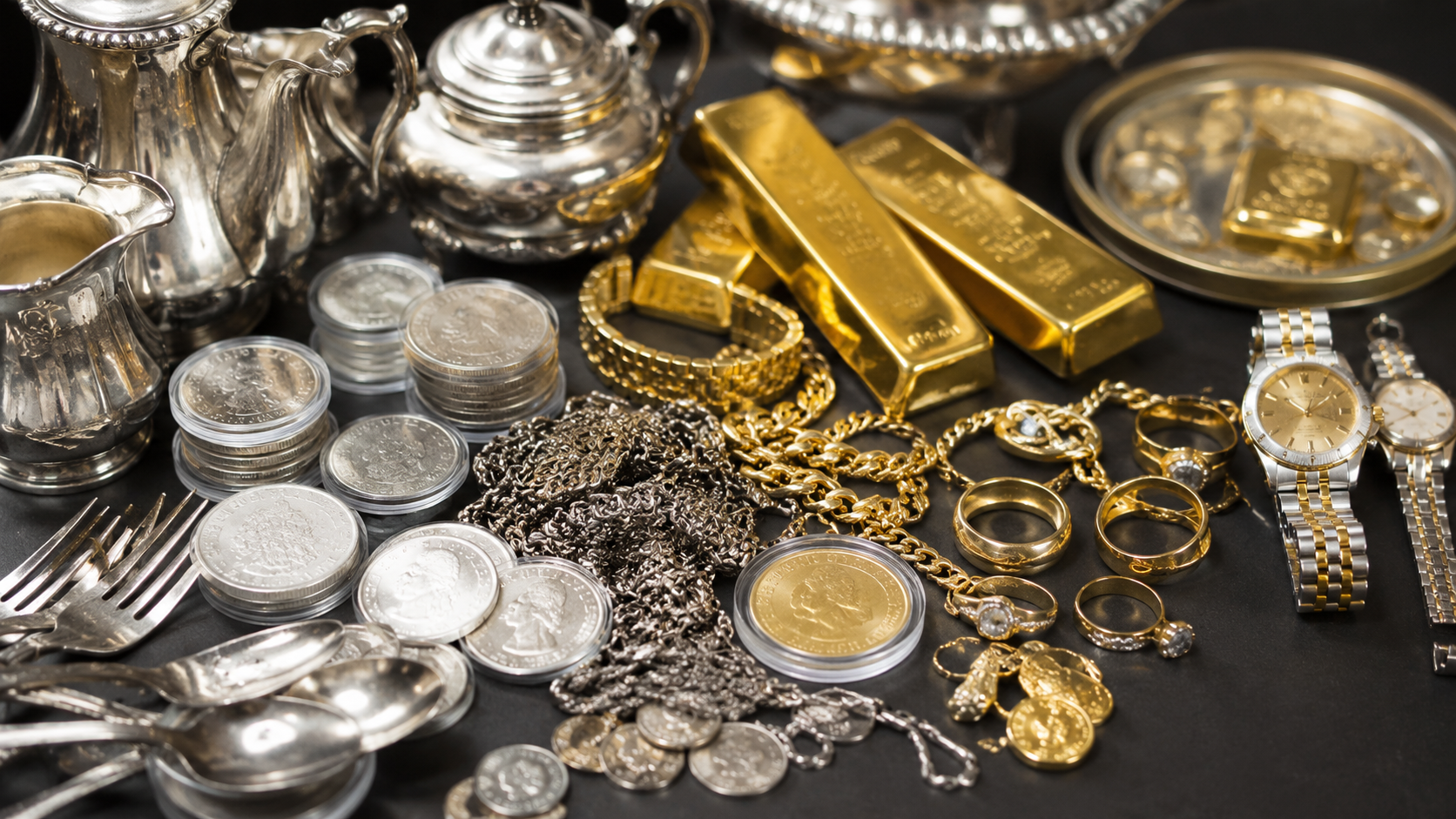
A gold and silver buyer typically accepts many types of precious metal items. However, the final value depends on purity, weight, condition, market prices, resale demand, and whether the item has added luxury or collectible value.
Common accepted items may include:
- Gold jewelry
- Silver jewelry
- Gold coins
- Silver coins
- Gold bars
- Silver bars
- Sterling silver flatware
- Estate jewelry
- Broken gold chains
- Gold watches
- Silver serving pieces
- Designer jewelry
- Rolex watches
- Diamond jewelry
- Precious metal collections
Because items can vary widely, it is best to bring anything you are unsure about for a professional review.
Gold Jewelry Is Commonly Accepted
Gold jewelry is one of the most common items people bring to a Phoenix gold buyer. In many cases, even jewelry that is broken, outdated, or no longer worn can still have value.
Accepted gold jewelry may include:
- Gold rings
- Gold necklaces
- Gold bracelets
- Gold earrings
- Gold charms
- Gold pendants
- Wedding bands
- Gold chains
- Gold watches
- Scrap gold
- Estate gold jewelry
Additionally, gold jewelry may include diamonds, gemstones, designer markings, or antique details. As a result, a professional buyer should review the entire piece, not just the gold content.
Broken Gold Can Still Have Value
Many people assume broken gold is worthless. However, broken chains, bent rings, single earrings, and damaged bracelets can still contain valuable gold.
Because gold is valued partly by purity and weight, damaged pieces may still qualify for a payout. Moreover, some broken jewelry may include gemstones or designer details that deserve closer inspection.
For that reason, do not leave broken pieces at home. When you sell gold jewelry, bring everything you want reviewed so the buyer can evaluate the full collection.
Gold Purity Affects What Is Accepted and Valued
Gold purity plays an important role in evaluation. Jewelry may be marked as 10K, 14K, 18K, 22K, or 24K. Since higher-karat gold contains more pure gold, it may bring a stronger offer when weight and market conditions are favorable.
Common gold purity levels include:
- 10K gold: Durable, but lower gold content
- 14K gold: Common in rings, bracelets, necklaces, and everyday jewelry
- 18K gold: Higher gold content, often used in fine jewelry
- 22K gold: Very high gold content
- 24K gold: Pure gold
Therefore, a trusted gold buyer should test your gold, explain the karat, and show how purity affects the offer.
Silver Jewelry and Sterling Silver Items
Silver is also commonly accepted, especially when clients have estate pieces, inherited collections, or unused household valuables. Although silver usually has a lower value per ounce than gold, larger collections can still be worthwhile.
Accepted silver items may include:
- Silver rings
- Silver necklaces
- Silver bracelets
- Silver earrings
- Sterling silver flatware
- Silver serving trays
- Silver tea sets
- Silver bowls
- Silver coins
- Silver bars
- Estate silver pieces
However, not all silver-colored items are sterling silver. Because of that, professional testing is important. A trusted buyer can help determine whether an item is sterling, plated, or another metal.
Sterling Silver Flatware and Serving Pieces
Sterling silver flatware is often found in estates, family collections, and older households. While many families no longer use formal silver sets, these pieces may still have precious metal value.
Items worth reviewing include:
- Forks
- Spoons
- Knives
- Serving utensils
- Trays
- Bowls
- Tea sets
- Pitchers
- Candlesticks
- Decorative silver pieces
In some cases, sterling silver pieces may also have collectible, brand, or antique value. Therefore, it is helpful to work with a buyer who understands both silver content and estate market appeal.
Gold and Silver Coins
Gold and silver coins may also be accepted by a precious metals buyer. However, coins can require careful evaluation because value may depend on more than metal content.
Coin value may be affected by:
- Metal purity
- Weight
- Condition
- Rarity
- Collectibility
- Mint year
- Market demand
- Precious metal price
For example, some coins may be valued mainly for gold or silver content. Others, however, may have collectible appeal. Because of this, coins should be reviewed carefully before accepting an offer.
Gold and Silver Bars
Gold and silver bars are often accepted by precious metal buyers. These items are usually evaluated based on weight, purity, markings, and current market conditions.
If you have gold or silver bars, bring any available documentation, packaging, or purchase records. Additionally, a professional buyer should verify authenticity and explain how the offer is calculated.
Estate Jewelry and Inherited Collections
Estate jewelry is one of the most important categories to evaluate carefully. Inherited collections may include gold, silver, diamonds, pearls, antique pieces, designer jewelry, watches, and family heirlooms.
Common estate items include:
- Gold rings
- Diamond jewelry
- Antique bracelets
- Brooches
- Pearl strands
- Designer pieces
- Silver collections
- Rolex watches
- Loose stones
- Family heirlooms
Some estate pieces are valued mainly for precious metal content. Others, however, may have antique, collectible, designer, or gemstone value. Therefore, a jewelry appraisal can be helpful before deciding whether to sell, keep, divide, or borrow against estate assets.
Diamond Jewelry and Gemstone Pieces
Gold and silver jewelry often includes diamonds or gemstones. Unfortunately, not every buyer gives these details proper attention. Because of that, two offers for the same item can vary.
A jewelry-focused buyer should inspect:
- Diamonds
- Rubies
- Sapphires
- Emeralds
- Pearls
- Custom settings
- Antique designs
- Designer markings
- Stone condition
For instance, a diamond ring may be worth more than its gold content alone. Similarly, an estate necklace with high-quality gemstones may deserve a more detailed evaluation.
Designer Jewelry
Designer jewelry can be accepted by luxury buyers, and it should be evaluated for more than metal weight. Brand recognition, authenticity, craftsmanship, condition, and resale demand may all affect value.
Designer jewelry may be reviewed for:
- Brand name
- Authenticity
- Condition
- Materials
- Craftsmanship
- Original packaging
- Receipts or certificates
- Resale demand
Because Biltmore Loan works with luxury assets, clients receive a more complete review of items that may have value beyond gold or silver content.
Rolex Watches and Luxury Watches
Many people visiting a Phoenix gold and silver buyer also own Rolex watches or luxury timepieces. However, these assets should not be treated like ordinary gold jewelry.
When you want to sell Rolex watches or use one as collateral, the buyer should understand luxury watch value.
A Rolex evaluation may consider:
- Model
- Reference number
- Condition
- Age
- Bracelet condition
- Dial type
- Original parts
- Box and papers
- Service history
- Rarity
- Current market demand
Consequently, luxury watches should be evaluated by professionals who understand authenticity, resale demand, and collateral value.
Selling vs. Borrowing Against Accepted Items
Accepted gold and silver items may be sold outright, but selling is not always the only option. In some cases, a collateral loan may better fit your needs.
Selling May Be Right When:
- You no longer use the item
- The piece has no sentimental value
- You inherited items you do not want
- Gold or silver prices are attractive
- You want a permanent payout
- You are simplifying a collection
A Collateral Loan May Be Better When:
- You want to keep ownership
- Fast cash is needed
- You prefer no credit check
- Bank delays are inconvenient
- Valuable jewelry or watches are available as collateral
- Short-term liquidity is the goal
- Confidential funding matters
As a result, working with Biltmore Loan gives clients more flexibility than simply selling outright.
Why a Luxury Pawn Shop Can Be Helpful
A traditional pawn shop may accept gold or silver, but not every shop specializes in luxury assets, designer jewelry, Rolex watches, diamonds, or estate collections.
By comparison, a luxury pawn shop provides a more refined experience for valuable items. Instead of only giving a quick counter offer, a luxury-focused buyer reviews the complete item and may also explain collateral lending options.
Biltmore Loan works with high-value assets such as gold jewelry, silver, diamonds, Rolex watches, luxury watches, designer jewelry, estate jewelry, fine art, collectibles, luxury handbags, and precious metals.
Additionally, clients appreciate private service, secure handling, and flexible funding solutions.
Local Expertise Across Phoenix and Nearby Communities
Local experience matters because Phoenix-area clients often bring different types of gold, silver, jewelry, and luxury assets.
In Phoenix, clients often want fast evaluations, competitive payouts, and secure transactions. Meanwhile, Scottsdale clients frequently seek discreet service for Rolex watches, diamonds, designer jewelry, and luxury collateral.
Across Mesa, Chandler, and Gilbert, many families and professionals need help selling unused gold jewelry, evaluating inherited pieces, or accessing short-term liquidity. Similarly, Tempe and Glendale residents may want quick cash without traditional bank complications.
In Fountain Hills, Cave Creek, and Queen Creek, clients often bring heirloom jewelry, estate collections, luxury watches, and valuable assets for expert review. Likewise, Peoria, Surprise, Goodyear, and Avondale residents increasingly look for reliable gold buyers and professional luxury pawn services.
In today’s market, understanding what a buyer accepts requires clear communication, careful evaluation, and a helpful reference before deciding whether to sell or borrow.
What to Bring for an Evaluation
Preparation can make the process smoother and more accurate.
Before visiting a Phoenix gold and silver buyer, consider bringing:
- Gold jewelry
- Silver jewelry
- Coins or bars
- Sterling silver flatware
- Watches
- Estate items
- Receipts, certificates, or appraisals
- Rolex boxes and papers
- Designer packaging
- Valid identification
Even without paperwork, Biltmore Loan can evaluate your items in person and explain your options. Nevertheless, supporting documents may help identify designer pieces, diamonds, Rolex watches, or estate jewelry more clearly.
Questions to Ask Before Selling Gold or Silver
Asking the right questions can help you understand your offer.
Useful questions include:
- What karat is my gold?
- Is this item sterling silver or plated?
- How much does it weigh?
- Is the offer based on melt value or resale value?
- Are diamonds or gemstones included?
- Does the item have designer or estate value?
- Would a jewelry appraisal help?
- Can this be used for a collateral loan instead?
- How quickly can funding be provided?
- Is the transaction confidential?
- How are high-value items protected?
A reputable buyer should answer clearly and respectfully. More importantly, you should never feel pressured into making a decision before you understand the payout.
Why Clients Choose Biltmore Loan
Clients throughout Phoenix, Scottsdale, Mesa, Chandler, Gilbert, Tempe, Glendale, Peoria, Surprise, Goodyear, Avondale, Queen Creek, Fountain Hills, and Cave Creek choose Biltmore Loan because they want a better experience.
Biltmore Loan is positioned as:
- A trusted Phoenix gold buyer
- A professional gold and silver buyer
- A luxury pawn shop alternative
- A Rolex buyer and collateral lender
- A jewelry appraisal resource
- An estate jewelry evaluation specialist
- A high-end collateral financing provider
- A discreet option for luxury asset lending
Furthermore, clients benefit from transparent evaluations, competitive payouts, expert jewelry knowledge, safe handling, confidential service, same-day funding options, and flexible lending solutions.
Final Thoughts: Many Gold and Silver Items May Have Value
Gold jewelry, silver, coins, flatware, estate pieces, Rolex watches, diamonds, designer jewelry, and luxury assets may all be worth evaluating before you decide whether to sell or borrow.
Contact Biltmore Loan today to discover the value of your gold, jewelry, Rolex, or luxury asset with confidence, privacy, and professionalism.