Whether you want to sell gold, sell gold jewelry, request a jewelry appraisal, compare a pawn shop, sell Rolex watches, or explore luxury collateral funding, Biltmore Loan gives Phoenix-area clients a trusted place to begin. When searching for “Phoenix where to sell gold,” beginners often focus only on getting fast cash; however, the real goal should be finding a buyer who offers transparency, security, and expert evaluation.
Gold jewelry, diamonds, Rolex watches, silver, estate pieces, and designer jewelry can carry more value than many owners realize. Therefore, first-time sellers should understand what affects value before accepting an offer. Across Phoenix, Scottsdale, Mesa, Chandler, Gilbert, Tempe, Glendale, Peoria, Surprise, Queen Creek, Fountain Hills, Cave Creek, Goodyear, and Avondale, Biltmore Loan provides professional evaluations, competitive payouts, confidential service, and same-day funding options for qualified luxury assets.
Mistake #1: Choosing the First Gold Buyer You Find
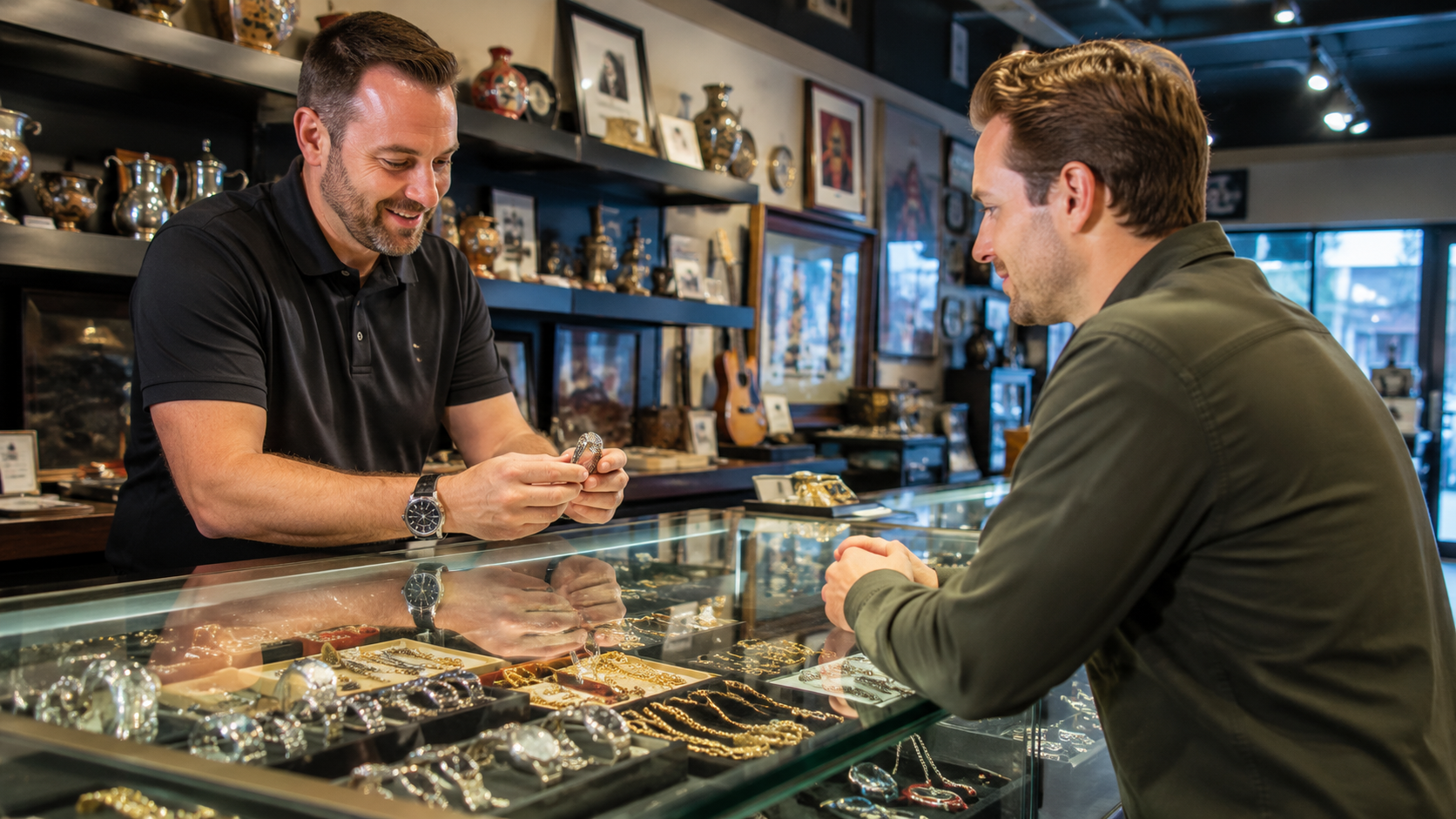
Many beginners choose the closest buyer without comparing options. However, convenience does not always equal value.
A trusted gold buyer should explain:
- Gold purity
- Item weight
- Current market influence
- Diamond or gemstone value
- Designer or estate value
- Resale demand
- Collateral loan options
- Transaction privacy
- Funding timeline
As a result, the best place to sell gold is often the buyer who takes time to explain the full process, not simply the one with the fastest offer.
Mistake #2: Not Understanding Gold Purity
Gold purity has a major impact on value. Jewelry may be marked as 10K, 14K, 18K, 22K, or 24K. Since higher-karat gold contains more pure gold, it may bring a stronger offer when weight and market conditions are favorable.
Common gold purity levels include:
- 10K gold: Durable, but lower gold content
- 14K gold: Common in rings, bracelets, necklaces, and everyday jewelry
- 18K gold: Higher gold content, often used in fine jewelry
- 22K gold: Very high gold content
- 24K gold: Pure gold
Therefore, beginners should ask how the gold is tested. If a buyer does not explain karat purity, the offer may not be as transparent as it should be.
Mistake #3: Forgetting That Weight Matters
Along with purity, weight affects the payout. Generally, heavier pieces contain more gold and may receive higher offers. However, karat and current gold prices still influence the final amount.
Items worth evaluating include:
- Gold necklaces
- Gold bracelets
- Wedding bands
- Gold earrings
- Gold charms
- Gold coins
- Broken gold chains
- Scrap gold
- Estate gold jewelry
- Gold watches
Even broken or outdated jewelry can still have value because of its gold content. Moreover, smaller pieces can add up when evaluated together. For that reason, bring all unwanted gold instead of deciding at home what is worth selling.
Mistake #4: Assuming Broken Gold Has No Value
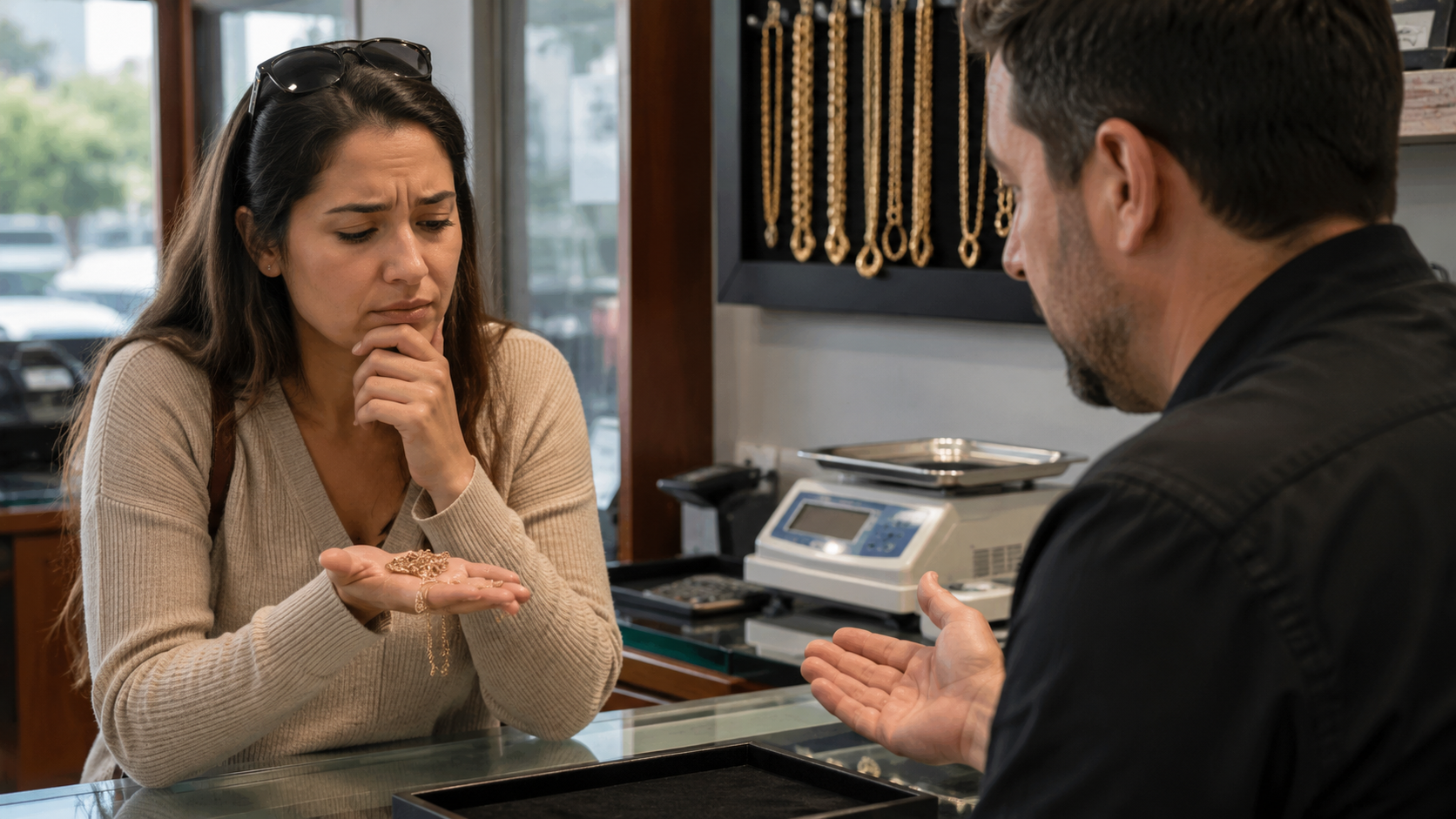
Beginners often leave broken jewelry behind because they think it is worthless. In reality, broken chains, bent rings, single earrings, and damaged bracelets may still contain valuable gold.
In addition, damaged jewelry may include diamonds, gemstones, designer markings, or estate appeal. Therefore, it is smart to have everything reviewed before making assumptions.
When you sell gold jewelry, the condition may matter less if the piece is valued for metal content. However, condition can matter more if the item has resale, designer, or collectible value.
Mistake #5: Accepting an Offer Without Asking Questions
A beginner should never feel uncomfortable asking questions. In fact, clear answers are one of the strongest signs of a trustworthy buyer.
Before accepting an offer, ask:
- What karat is my gold?
- How much does it weigh?
- Is the offer based on melt value or resale value?
- Are diamonds or gemstones included?
- Does the item have designer or estate value?
- Would a jewelry appraisal help?
- Do you also buy silver?
- Can this be used for a collateral loan instead?
- How quickly can funding be provided?
- Is the transaction confidential?
A reputable buyer should answer clearly and respectfully. More importantly, you should never feel pressured into making a decision before you understand the offer.
Mistake #6: Ignoring Melt Value vs. Resale Value
One of the biggest beginner mistakes is not knowing the difference between melt value and resale value.
Melt value focuses mainly on precious metal content. Resale value, however, may include brand, condition, diamonds, gemstones, craftsmanship, antique appeal, and demand.
Gold jewelry may have added value because of:
- Designer brand
- Diamonds
- Rubies, sapphires, emeralds, or other gemstones
- Antique craftsmanship
- Estate history
- Rare settings
- Matching sets
- Original packaging
- Luxury resale demand
Therefore, when deciding where to sell gold, look for a buyer who understands jewelry, not just precious metals.
Mistake #7: Overlooking Jewelry Appraisal Benefits
A jewelry appraisal can help beginners understand valuable pieces before selling. This is especially important for diamond rings, designer jewelry, estate pieces, and inherited collections.
An appraisal may review:
- Gold purity
- Diamond quality
- Gemstone type
- Designer origin
- Condition
- Estate value
- Resale potential
- Collateral value
- Replacement value
However, appraisal value and cash offer value are not always the same. For example, an insurance appraisal may estimate replacement cost, while a purchase offer reflects resale demand, liquidity, condition, and current market factors. Because of this, a trusted buyer should explain the difference clearly.
Mistake #8: Treating Estate Jewelry Like Scrap Gold
Estate jewelry can be difficult to evaluate without experience. Inherited pieces may include gold, diamonds, silver, pearls, antique settings, designer jewelry, Rolex watches, and heirlooms.
Some estate pieces are valued mainly for precious metal content. Others, however, may have antique, collectible, or designer appeal. Therefore, selling estate jewelry too quickly may lead to missed value.
Common estate items include:
- Gold rings
- Diamond jewelry
- Antique bracelets
- Brooches
- Pearl strands
- Designer pieces
- Silver collections
- Rolex watches
- Loose stones
- Family heirlooms
In many cases, professional evaluation helps families decide whether to sell, keep, divide, or borrow against estate assets.
Mistake #9: Comparing Only Traditional Pawn Shops
A traditional pawn shop may be convenient, but not every shop specializes in high-value gold jewelry, Rolex watches, diamonds, designer pieces, or estate collections.
By comparison, a luxury pawn shop provides a more refined experience for valuable assets. Instead of only giving a quick counter offer, a luxury-focused buyer reviews the complete item and may also explain collateral lending options.
Biltmore Loan works with high-value assets such as:
- Gold jewelry
- Silver
- Diamonds
- Rolex watches
- Luxury watches
- Designer jewelry
- Estate jewelry
- Fine art
- Collectibles
- Luxury handbags
- Precious metals
Additionally, clients appreciate private service, secure handling, and flexible funding solutions.
Mistake #10: Not Considering a Collateral Loan
Selling is not always the best choice. Sometimes, beginners sell an item permanently when a collateral loan may better fit their needs.
When you sell, the buyer makes a purchase offer. In contrast, borrowing allows the item to be used as collateral for a loan. Therefore, you may access liquidity while keeping the option to reclaim the item according to the loan terms.
Selling May Be Right When:
- You no longer wear the jewelry
- The item has no sentimental value
- You inherited pieces you do not want
- Gold prices are attractive
- You want a permanent payout
- You are upgrading your collection
A Collateral Loan May Be Better When:
- You want to keep ownership
- Fast cash is needed
- You prefer no credit check
- Bank delays are inconvenient
- Valuable jewelry or watches are available as collateral
- Short-term liquidity is the goal
- Confidential funding matters
As a result, working with Biltmore Loan gives clients more flexibility than simply selling outright.
Mistake #11: Undervaluing Rolex and Luxury Watches
Many beginners searching for “Phoenix where to sell gold” also own Rolex watches or luxury timepieces. However, these assets should not be treated like ordinary gold jewelry.
When you want to sell Rolex watches or use one as collateral, the buyer should understand luxury watch value.
A Rolex evaluation may consider:
- Model
- Reference number
- Condition
- Age
- Bracelet condition
- Dial type
- Original parts
- Box and papers
- Service history
- Rarity
- Current market demand
A Rolex has value beyond metal content. Consequently, it should be evaluated by someone who understands authenticity, luxury demand, and resale value.
Mistake #12: Forgetting About Silver
Some beginners bring gold but leave silver items at home. In that situation, they may miss a chance to understand their total asset value.
Although silver usually has a lower value per ounce than gold, larger collections can still be worthwhile. For that reason, a gold and silver buyer can be helpful when reviewing estate or household items.
Silver items worth reviewing include:
- Sterling silver flatware
- Silver coins
- Silver bars
- Silver jewelry
- Estate silver pieces
- Silver trays
- Tea sets
- Serving pieces
If you are already bringing gold jewelry for review, including silver items may give you a clearer picture of your total value.
Mistake #13: Not Bringing Documentation
Documentation is not always required. However, paperwork can sometimes support value and help the buyer identify important details.
Helpful documents may include:
- Receipts
- Certificates
- Appraisals
- Insurance records
- Diamond reports
- Rolex papers
- Designer packaging
- Estate records
Additionally, original boxes, papers, and packaging may matter for luxury watches and designer jewelry. Therefore, bring anything related to the item if you have it.
Mistake #14: Cleaning Jewelry Too Aggressively
Some beginners try to polish or repair jewelry before selling. However, aggressive cleaning can sometimes damage antique pieces, estate jewelry, gemstones, or delicate settings.
Instead, bring the item as it is. A professional buyer can review condition without unnecessary risk. Moreover, some antique or estate pieces may be better evaluated in their original state.
Local Expertise Matters in Phoenix
Local experience matters because Phoenix-area clients often have different needs based on lifestyle, assets, and financial goals.
In Phoenix, clients often want fast evaluations, competitive payouts, and secure transactions. Meanwhile, Scottsdale clients frequently seek discreet service for Rolex watches, diamonds, designer jewelry, and luxury collateral.
Across Mesa, Chandler, and Gilbert, many families and professionals need help selling unused gold jewelry, evaluating inherited pieces, or accessing short-term liquidity. Similarly, Tempe and Glendale residents may want quick cash without traditional bank complications.
In Fountain Hills, Cave Creek, and Queen Creek, clients often bring heirloom jewelry, estate collections, luxury watches, and valuable assets for expert review. Likewise, Peoria, Surprise, Goodyear, and Avondale residents increasingly look for reliable gold buyers and professional luxury pawn services.
In today’s market, first-time sellers benefit from clear communication, careful evaluation, and practical direction before deciding where to sell or borrow.
How Beginners Can Prepare Before Selling Gold
Preparation can help you feel more confident.
Before visiting a Phoenix buyer, consider these steps:
- Gather all gold jewelry, silver, watches, and estate items.
- Bring receipts, certificates, appraisals, or insurance documents if available.
- Keep Rolex boxes, papers, and designer packaging.
- Avoid aggressive cleaning or polishing.
- Ask whether the item has value beyond gold weight.
- Decide whether selling or borrowing is better for your needs.
- Choose a buyer who explains the process clearly.
Even without paperwork, Biltmore Loan can evaluate your items in person and explain your options.
Why Clients Choose Biltmore Loan
Clients throughout Phoenix, Scottsdale, Mesa, Chandler, Gilbert, Tempe, Glendale, Peoria, Surprise, Goodyear, Avondale, Queen Creek, Fountain Hills, and Cave Creek choose Biltmore Loan because they want a better experience.
Biltmore Loan is positioned as:
- A trusted Phoenix gold buyer
- A professional gold and silver buyer
- A luxury pawn shop alternative
- A Rolex buyer and collateral lender
- A jewelry appraisal resource
- An estate jewelry evaluation specialist
- A high-end collateral financing provider
- A discreet option for luxury asset lending
Furthermore, clients benefit from transparent evaluations, competitive payouts, expert jewelry knowledge, safe handling, confidential service, same-day funding options, and flexible lending solutions.
Final Thoughts: Avoid Beginner Mistakes Before Selling Gold
Gold, Rolex watches, diamonds, silver, estate jewelry, and designer pieces deserve careful review from professionals who understand precious metals, resale value, and luxury collateral lending.
Contact Biltmore Loan today to discover the value of your gold, jewelry, Rolex, or luxury asset with confidence, privacy, and professionalism.