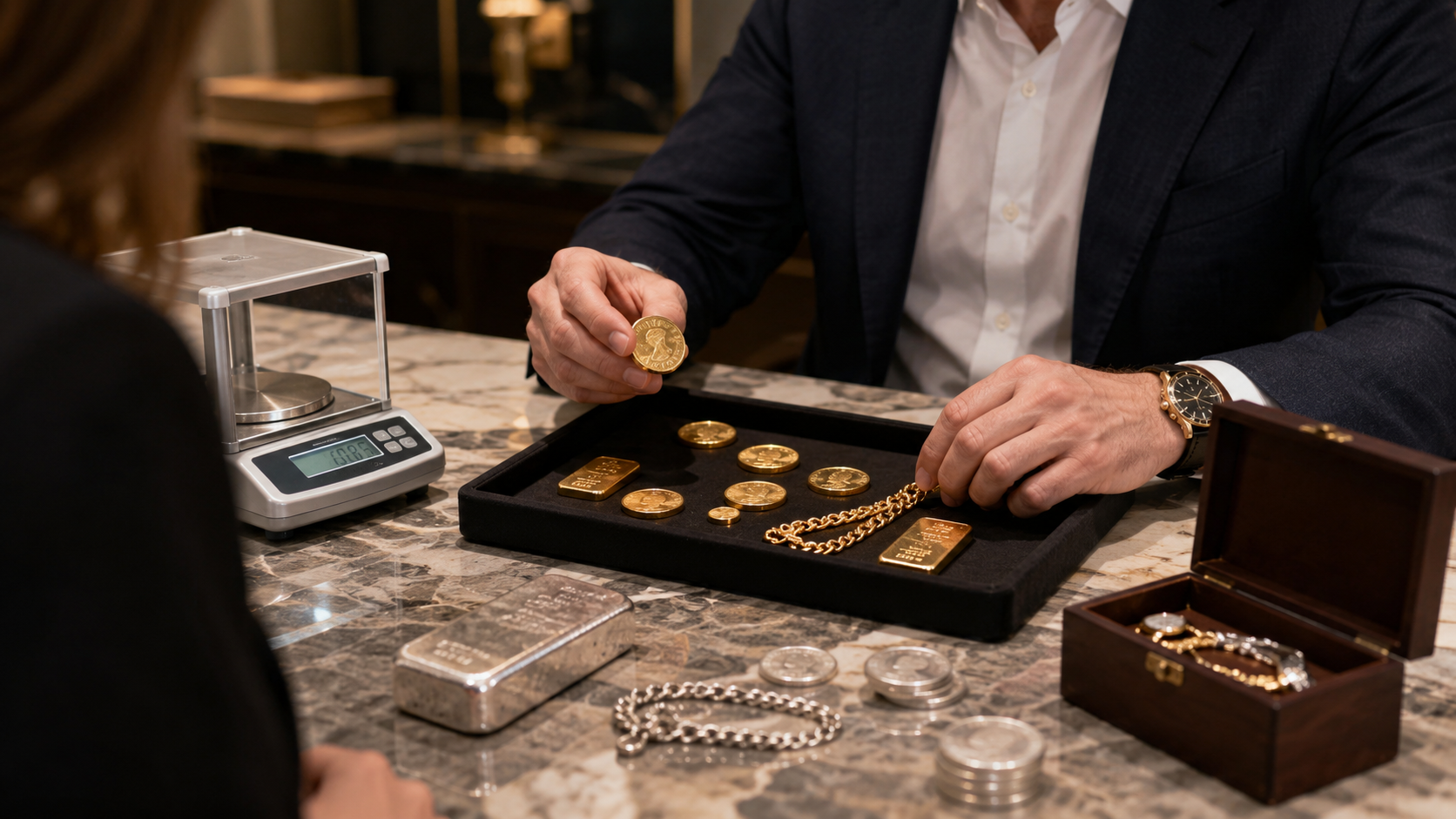
Gold’s Enduring Value: A Comparative Analysis Across Centuries
Gold has commanded reverence for millennia, functioning simultaneously as currency, a marker of prestige, and a safeguard against uncertainty. Its persistent allure spans generations, civilizations, and financial paradigms. For discerning investors and collectors in 2026, understanding how gold’s role has evolved—and why it remains a cornerstone asset—provides crucial context for decisions involving acquisition, liquidation, or collateralization of precious metals.
The Historical Foundation of Gold’s Worth
From humanity’s earliest civilizations, gold occupied an unparalleled position in economic and cultural frameworks. Ancient Egyptians adorned pharaohs with gold in life and entombed them with it in death, believing it possessed divine properties. The Greeks and Romans minted gold coins that facilitated trade across vast empires, while simultaneously crafting elaborate jewelry that signified social hierarchy and political authority.
Gold’s unique properties—its rarity in nature, resistance to corrosion, malleability for intricate workmanship, and unmistakable luster—rendered it ideal for both utilitarian and ceremonial applications. Unlike silver, which tarnishes, or base metals that corrode, gold maintains its integrity across centuries, a quality that translated directly into sustained economic value.
The Gold Standard Era
For much of modern history, gold literally defined monetary value. Nations worldwide adopted the gold standard, pegging their currencies to specific quantities of gold reserves. This system provided stability and confidence, as paper currency represented a tangible claim on physical gold holdings. The United States maintained this direct convertibility until 1971, when President Nixon ended the Bretton Woods system, fundamentally altering gold’s official role in global finance.
During the gold standard era, gold prices remained relatively stable by government mandate. An ounce of gold was fixed at $20.67 from 1879 to 1933, then revalued to $35 per ounce until the early 1970s. This artificial stability masked gold’s true market dynamics but reinforced its perception as an immutable store of value.
Gold’s Value in Contemporary Markets
Today’s gold market operates in a fundamentally different environment. Freed from government price controls, gold trades openly on global exchanges, with values responding to supply dynamics, inflation expectations, currency fluctuations, geopolitical tensions, and investor sentiment. This market-driven pricing reveals gold’s authentic worth in ways the fixed-price era could not.
The past two decades have witnessed extraordinary appreciation in gold values. From approximately $300 per ounce in the early 2000s, gold surged past $2,000 in 2020 during pandemic-driven uncertainty. By 2025, prices reached unprecedented heights, and entering 2026, gold continues trading at elevated levels that reflect both inflationary pressures and ongoing geopolitical instability across multiple regions.
Gold as Portfolio Insurance
Sophisticated investors increasingly view gold not merely as a commodity but as essential portfolio diversification. Unlike equities, bonds, or real estate—assets that can correlate during systemic crises—gold typically moves independently or inversely to traditional financial instruments. This negative correlation provides crucial protection when conventional markets experience stress.
For high-net-worth individuals managing substantial assets, maintaining a gold allocation offers protection against currency debasement, banking system vulnerabilities, and the erosion of purchasing power that accompanies inflation. Whether held as bullion, coins, or high-karat jewelry, physical gold represents tangible wealth outside the financial system—an attribute with renewed relevance as central banks expand money supplies and sovereign debt levels reach historic proportions.
Why Gold Retains Its Relevance in 2026
Despite extraordinary technological innovation, the proliferation of cryptocurrencies, and increasingly sophisticated financial derivatives, gold maintains intrinsic characteristics that ensure continued relevance:
Fundamental Scarcity
Gold’s supply increases only marginally each year through mining operations. Global gold stocks grow approximately 1.5-2% annually, a rate constrained by geological reality rather than policy decisions. This predictable scarcity contrasts sharply with fiat currencies, which central banks can expand without physical limitation, or digital assets, where new protocols and tokens emerge continuously.
Universal Acceptance
Gold requires no counterparty, carries no credit risk, and commands recognition across every jurisdiction and culture. A gold coin or bar holds value whether in Scottsdale, Singapore, or Stockholm. This universal liquidity proves invaluable for internationally-minded investors and those seeking assets that transcend political boundaries. For those considering liquidation, understanding how to sell gold efficiently becomes essential to accessing this global market.
Crisis-Tested Reliability
Throughout modern financial history—the 1970s stagflation, the 2008 financial crisis, the 2020 pandemic, and the 2022-2023 banking sector turbulence—gold has repeatedly demonstrated its protective qualities. While past performance offers no guarantee, this consistent pattern across diverse crisis scenarios reinforces gold’s reputation as the ultimate safe-haven asset.
Inflation Hedge Characteristics
As inflation erodes the purchasing power of cash and fixed-income investments, gold has historically preserved real value over extended periods. The 2021-2024 inflation surge—the most pronounced in four decades—drove renewed appreciation for gold’s inflation-resistant properties, particularly among investors who experienced wealth erosion in bond portfolios.
Comparing Historical and Contemporary Gold Ownership
The manner in which individuals and institutions hold and utilize gold has evolved substantially, even as its core attributes remain constant.
Then: Currency and Status Symbol
Historically, gold functioned primarily as money itself or as backing for paper currency. Individuals held gold coins for transactions, while governments maintained reserves to support monetary systems. Gold jewelry served dual purposes—personal adornment and portable wealth that could be liquidated during hardship. Ownership was relatively straightforward: physical possession of coins, bullion, or jewelry.
Now: Diversified Financial Asset
Contemporary gold ownership encompasses multiple forms and strategies. Investors may hold physical bullion and coins, exchange-traded funds that track gold prices, mining company shares, or futures contracts. High-net-worth individuals often maintain diverse gold holdings—perhaps investment-grade bullion for portfolio allocation, numismatic coins for collecting, and luxury items like high-karat jewelry or gold Rolex watches that combine aesthetic appeal with intrinsic value.
For those holding such luxury assets, options include outright sale or short-term collateral loans that provide liquidity while maintaining ownership. This flexibility allows strategic financial management unavailable to previous generations, where liquidation represented the only means of accessing gold’s value.
Jewelry: The Intersection of Beauty and Value
Fine gold jewelry represents a unique asset category—simultaneously wearable art and investment-grade precious metal. A well-crafted 18k or 22k gold piece from prestigious houses carries value beyond its melt weight, incorporating craftsmanship, brand provenance, and design. Yet unlike purely decorative items, gold jewelry retains substantial intrinsic value based on precious metal content, providing downside protection that costume jewelry cannot offer.
Gold’s Trajectory: Past Lessons, Future Considerations
Examining gold’s price evolution provides perspective on both its volatility and its long-term trajectory. An ounce purchased in 1971 at $35 would be worth over fifty times that amount in 2026—a return exceeding most asset classes over the same period. This appreciation occurred not in a straight line but through cycles of accumulation, explosive rallies during crisis periods, and consolidations during calmer economic conditions.
For individuals considering whether to hold, acquire, or liquidate gold assets in 2026, historical patterns suggest several principles:
Long-term holding rewards patience: Gold’s value appreciation manifests over years and decades rather than months. Short-term volatility can be pronounced, but extended holding periods have consistently generated substantial returns.
Crisis periods amplify gold’s value: The largest price increases typically occur during financial stress, geopolitical tension, or inflationary episodes—precisely when portfolio protection proves most valuable.
Quality and purity matter: Investment-grade gold—whether bullion, coins, or high-karat jewelry—commands premium pricing and superior liquidity compared to lower-purity items or poorly documented pieces.
Reputable transaction partners are essential: Whether acquiring or liquidating gold, working with established, licensed professionals ensures fair pricing, proper documentation, and discreet handling befitting significant assets.
The Enduring Case for Gold
Gold’s fundamental role has evolved from monetary standard to strategic asset, yet its essential characteristics remain unchanged. In 2026, as in ancient civilizations, gold represents tangible wealth, financial security, and protection against uncertainty. Its inability to be printed, devalued by decree, or defaulted upon distinguishes it from virtually every other financial asset.
For discerning investors managing substantial wealth, gold serves multiple functions simultaneously—portfolio diversification, inflation protection, crisis insurance, and wealth preservation across generations. Whether held as bullion for pure investment purposes or as fine jewelry combining aesthetics with intrinsic value, gold continues offering stability and security in an increasingly complex financial landscape.
Understanding gold’s historical context and contemporary applications enables informed decisions about allocation, acquisition, and strategic liquidation. As economic conditions evolve and new financial instruments emerge, gold’s millennia-long track record suggests it will continue serving as humanity’s most dependable store of value.
- Family-owned Scottsdale business
- A+ rated with the BBB
- GIA-trained appraisers
- Fully insured private vault
- Same-day cash or loan
- No obligation, free appraisal
Sell It, Loan Against It — Your Choice
Sell Outright
Walk out the same day with cash in hand. Biltmore Loan and Jewelry pays market-based prices for Rolex, gold, silver, diamonds, and fine jewelry — no pressure, no obligation.
Borrow Against It
Keep your item. We’re a licensed Arizona collateral lender — short-term loans secured by your valuables. No credit check, same-day funding.
Our Most-Requested Services
- Sell Your Rolex
- Sell Gold
- Sell Silver
- Sell Diamonds
- Sell Fine Jewelry
- Collateral Loans
- Rolex Buyer — Scottsdale
- Rolex Buyer — Phoenix
- Diamond Buyer — Scottsdale
- Sell vs. Loan Guide
Get a Free Appraisal
Same-day cash or funded loan. No obligation.
Or call 480-991-5626. Walk-ins welcome at 15678 N Scottsdale Rd Suite 101, Scottsdale, AZ 85254.