Understanding Gold Spot Price: What It Means When You’re Ready to Sell
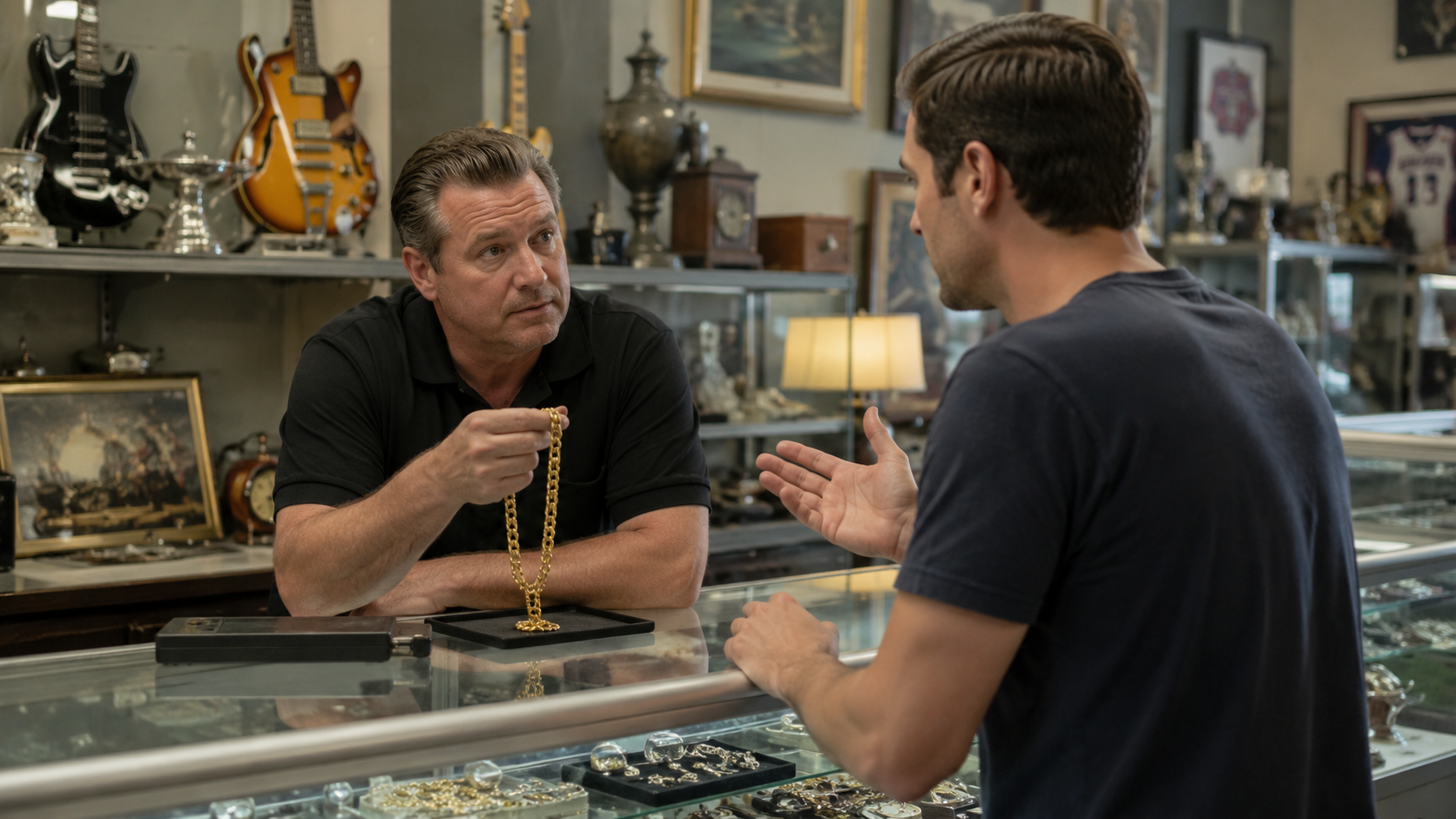
When financial news reports that “gold is trading at $2,650 per ounce,” they’re referring to the spot price—the current global benchmark for one troy ounce of pure 24-karat gold. This figure represents the price at which gold trades on international commodity exchanges in real time. However, understanding how spot price translates to what you’ll actually receive when selling gold jewelry, coins, or bullion requires understanding several important factors that determine your payout.
For discerning sellers in Scottsdale and throughout Arizona, knowing how spot price works isn’t just academic—it’s essential for making informed decisions about timing, expectations, and choosing the right buyer for your gold assets.
The Foundation: What Karat Purity Means
The vast majority of gold jewelry, watches, and even some coins are not pure 24-karat gold. Karat measurement indicates the percentage of actual gold content in an alloy, with the remainder consisting of other metals like copper, silver, nickel, or zinc added for durability, color, or workability.
Standard Gold Purity Levels
- 24k = 100% pure gold (999.9 fine)
- 22k = 91.67% gold (common in high-end coins like American Gold Eagles and certain international jewelry)
- 18k = 75% gold (the standard for fine luxury jewelry and high-end watches)
- 14k = 58.33% gold (the most common purity in American jewelry)
- 10k = 41.67% gold (the minimum legally marketable as “gold” in the United States)
European jewelry often carries different hallmarks—750 for 18k, 585 for 14k, and 417 for 10k—but these represent the same purity standards expressed in parts per thousand rather than karats.
Calculating the True Gold Value of Your Items
Once you understand karat purity, determining the intrinsic gold value becomes a straightforward mathematical exercise. Let’s walk through a real-world example using current market conditions.
Sample Calculation: 14k Gold Bracelet
Assume the current spot price is $2,650 per troy ounce and you have a 14-karat gold bracelet weighing 25 grams:
- Pure gold content: 25g × 0.5833 = 14.58 grams of pure 24k gold
- Conversion to troy ounces: 14.58g ÷ 31.1035 (grams per troy ounce) = 0.469 troy ounces
- Theoretical value at spot: 0.469 oz × $2,650 = $1,243
This figure represents the pure melt value—the theoretical maximum if the gold were refined to pure bullion and sold at the exact moment’s spot price. In practice, when you sell gold to a reputable buyer, your payout will be a percentage of this melt value.
Why You Don’t Receive 100% of Spot
Professional gold buyers factor in several legitimate business costs that create the spread between spot price and payout:
- Refining costs: Converting mixed-karat jewelry into pure gold requires specialized refining services with associated fees
- Assaying expenses: Professional testing to verify purity and weight
- Market risk: Gold prices fluctuate continuously; buyers assume price risk between purchase and refining
- Business operations: Facility costs, licensing, insurance, and expertise
Transparent buyers typically pay 80-92% of melt value for jewelry gold, with higher percentages offered for larger quantities, higher purity items, and established bullion products. Items with additional value beyond their gold content may command premiums above their melt value.
Gold Coins and Bullion: A Different Category
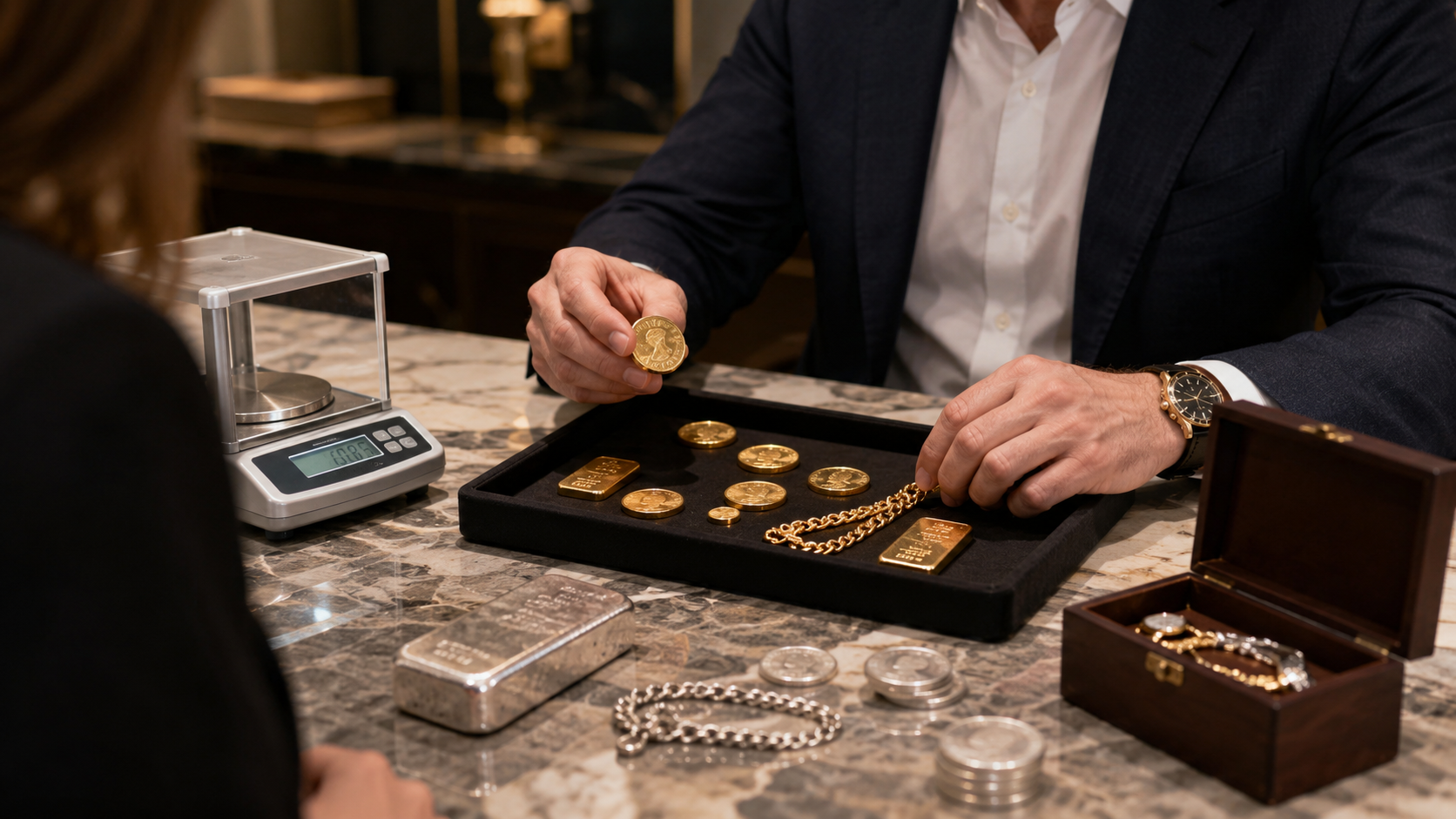
Investment-grade gold products trade differently than jewelry. American Gold Eagles, Canadian Maple Leafs, South African Krugerrands, and recognized gold bars from accredited refiners carry minimal refining requirements and enjoy immediate liquidity in the precious metals market.
These products typically command 95-98% of spot price from reputable buyers, with the small spread reflecting only handling and immediate liquidity provision. In some market conditions with high retail demand, common bullion coins may actually trade at premiums above their pure gold content.
Numismatic Considerations
Certain gold coins possess collectible value that exceeds their metal content. Pre-1933 U.S. gold coins, rare-date pieces, and coins in exceptional condition may be worth multiples of their melt value to collectors. A knowledgeable buyer will recognize these pieces and compensate accordingly—another reason to work with experienced professionals rather than generic gold buyers.
Jewelry With Gemstones: Dual-Asset Evaluation
When your gold jewelry contains diamonds or other precious stones, you’re actually selling multiple assets simultaneously. Professional buyers evaluate each component separately to ensure you receive fair compensation for both elements.
The gold is assessed based on weight and karat as described above, while diamonds are evaluated according to the 4Cs—carat weight, cut quality, color grade, and clarity. Colored gemstones like sapphires, rubies, and emeralds are assessed based on their own quality characteristics and current market demand.
This dual evaluation is particularly important for pieces containing significant stones. A designer ring with a one-carat diamond in an 18k setting might have $800 in gold value but $3,500 in total value when the diamond is properly assessed. Working with buyers who have gemological expertise ensures nothing is overlooked.
Luxury Watches: When Gold Value Is Just the Beginning
Gold Rolex watches and other luxury timepieces represent a special category. While these pieces contain substantial amounts of 18k gold—a Rolex Day-Date, for example, contains well over 100 grams—their value as functioning luxury watches almost always far exceeds their melt value.
A knowledgeable buyer will evaluate these pieces as collectible timepieces first, considering model, condition, originality, and market demand. Only non-functional or severely damaged luxury watches should ever be considered for their gold content alone, and even then, the decision deserves careful consideration given the strong secondary market for pre-owned Rolex watches and other premium brands.
Timing and Market Awareness
Gold spot price fluctuates continuously during market hours, responding to currency movements, geopolitical developments, inflation expectations, and investment demand. While attempting to time the market perfectly is rarely practical for individual sellers, basic awareness of trend direction can inform your decision-making.
In early 2026, gold continues to function as a portfolio hedge and store of value amid ongoing economic uncertainties. Whether current price levels represent an optimal selling opportunity depends on your individual financial situation, liquidity needs, and alternative investment options—considerations that extend beyond the scope of spot price mechanics alone.
The Importance of Working With Established Buyers
Understanding spot price mechanics empowers you to evaluate offers intelligently. When you know your 18k bracelet contains 0.6 troy ounces of pure gold and spot is at $2,650, you can quickly calculate that melt value is approximately $1,590—and assess whether an offer of $1,350 represents fair value given typical buyer margins.
Licensed buyers with established reputations stake their business on transparent pricing and fair treatment. They provide detailed breakdowns showing weight, purity testing results, and the calculation methodology behind their offers. This transparency stands in stark contrast to high-pressure tactics or vague “best offer” approaches that characterize less reputable operations.
For substantial gold holdings, consider obtaining multiple evaluations. Legitimate buyers welcome informed sellers and have no objection to customers seeking competitive offers—they’re confident their pricing reflects fair market value.
- Family-owned Scottsdale business
- A+ rated with the BBB
- GIA-trained appraisers
- Fully insured private vault
- Same-day cash or loan
- No obligation, free appraisal
Sell It, Loan Against It — Your Choice
Sell Outright
Walk out the same day with cash in hand. Biltmore Loan and Jewelry pays market-based prices for Rolex, gold, silver, diamonds, and fine jewelry — no pressure, no obligation.
Borrow Against It
Keep your item. We’re a licensed Arizona collateral lender — short-term loans secured by your valuables. No credit check, same-day funding.
Our Most-Requested Services
- Sell Your Rolex
- Sell Gold
- Sell Silver
- Sell Diamonds
- Sell Fine Jewelry
- Collateral Loans
- Rolex Buyer — Scottsdale
- Rolex Buyer — Phoenix
- Diamond Buyer — Scottsdale
- Sell vs. Loan Guide
Get a Free Appraisal
Same-day cash or funded loan. No obligation.
Or call 480-991-5626. Walk-ins welcome at 15678 N Scottsdale Rd Suite 101, Scottsdale, AZ 85254.